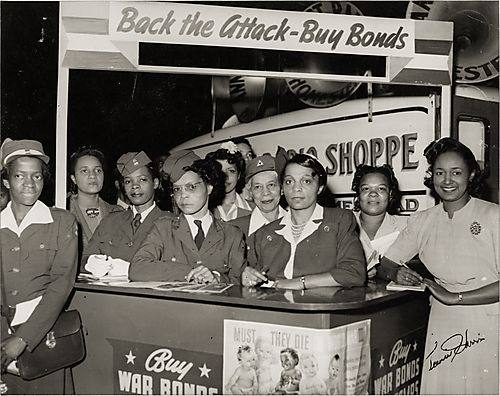
Harris, Charles Teenie | Teenie Harris Photograph Collection, 1920-1970
Contemporary Studies
Through the years of the first Great Migration and beyond, graduate students at the University of Pittsburgh conducted research on migrant living and working conditions in the Steel City. Some of these students—such as Abram Harris, Ira Reid, and Wiley Hall—received funding from the Urban League of Pittsburgh, which awarded competitive scholarships for college-educated African Americans to earn advanced degrees in economics, social work, or sociology at the University of Pittsburgh. Committed to developing research and publicity around critical issues affecting Black life, the National Urban League also produced a monthly publication called Opportunity: A Journal of Negro Life. The periodical featured articles and essays dealing with a variety of topics and cities, some of which centered on Pittsburgh. Collectively, the masters’ theses and magazine articles featured below provide valuable data on migrant experiences in the Steel City. They are listed chronologically.
- Abraham Epstein, “The Negro Migrant in Pittsburgh” (BA Thesis, University of Pittsburgh, 1918).
- Abram Lincoln Harris, Jr., “The New Negro Worker in Pittsburgh” (MA Thesis, University of Pittsburgh, 1924).
- Ira De Augustine Reid, “The Negro in the Major Industries and Building Trades of Pittsburgh” (MA Thesis, University of Pittsburgh, 1925).
- Wiley A. Hall, “Negro Housing and Rents in the Hill District of Pittsburgh” (MA Thesis, University of Pittsburgh, 1929).
- Alexander Zerful Pittler, “The Hill District of Pittsburgh: A Study in Succession” (MA Thesis, University of Pittsburgh, 1930).
- John V. Anderson, “Employment in Pittsburgh with Reference to the Negro” (MA Thesis, University of Pittsburgh, 1932).
- Elsie Rosalia Clarke, “A Study of Juvenile Delinquency in a Restricted Area of Pittsburgh” (MA Thesis, University of Pittsburgh, 1932).
- Howard David Gould, “A Survey of the Occupational Opportunities for Negroes in Allegheny County” (MA Thesis, University of Pittsburgh, 1934).
- James H Brewer, “Robert Lee Vann and the Pittsburgh Courier” (MA Thesis, University of Pittsburgh, 1941).
- Faith Louise Simmons, “The Negro in Recent Pittsburgh Politics” (MA Thesis, University of Pittsburgh, 1945).
- John T. Clark, “The Migrant in Pittsburgh,” Opportunity v.1 (Oct 1923)
- W.P. Young, “The First Hundred Negro Workers,” Opportunity v.2 (Jan 1924)
- John T. Clark, “The Negro in Steel,” Opportunity v.2 (Oct 1924)
Masters’ Theses
Opportunity Magazine
Manuscript Collections
- Urban League of Pittsburgh Records, 1915-1963 (Archives & Special Collections, Pittsburgh)
- NAACP Pittsburgh Branch Records, 1915-1937 (Library of Congress, Washington DC)
- NAACP Pittsburgh Branch Records, 1940-1966 (Archives & Special Collections, Pittsburgh)
- Homer S. Brown Papers (Archives & Special Collections, Pittsburgh)
- Ernest Rice McKinney Papers (Archives & Special Collections, Pittsburgh)
- K. Leroy Irvis Papers (Archives & Special Collections, Pittsburgh)
- Daisy Lampkin Papers (Heinz History Center, Pittsburgh)
- Percival Prattis & RL Vann Papers (Moorland-Spingarn Research Center, Washington DC)
Organizational Records
Personal Papers
Newspaper Reports
The below stories appeared in the pages of the Pittsburgh Courier, a Black owned and operated weekly newspaper. Established in 1910, the paper gradually increased its circulation, enlarged its staff of journalists, feature writers, correspondents, and typesetters, and expanded its coverage from local news in Pittsburgh to national issues of concern to Black readers and civil rights advocates across the United States. By the late 1930s, the Courier’s circulation had climbed to about 149,000, far exceeding its closest competitors, the Baltimore Afro-American and the Chicago Defender, which respectively had circulations of about seventy thousand and fifty thousand. The selection of articles featured here address the Courier’s coverage of the Great Migration to Pittsburgh and offer additional material with which to reconstruct the experiences of Black migrants in the city. They are listed chronologically. Most did not identify an author.
- “Race Prejudice can be Combatted Through Individual Effort, Declares Walter A. May,” Pittsburgh Courier, 20 January 1923.
- “Southern Railway Proves Route of Migrants’ Exits From Dixie Cotton Fields,” Pittsburgh Courier, 2 June 1923.
- “Expose Plot to Send Back Migrants,” Pittsburgh Courier, 28 July 1923.
- John L. Clark, “Pittsburgh,” Pittsburgh Courier, 27 October 1923.
- “Pittsburgh Social Workers Readily Endorse Courier’s Welfare Emergency Appeal,” Pittsburgh Courier, 24 November 1924
- John T. Clark, “Letter to the Editor,” Pittsburgh Courier, 13 September 1924.
- “Migrants and Miners,” Pittsburgh Courier, 27 November 1926.
- “Urban League Head Makes Local Survey,” Pittsburgh Courier, 19 October 1929.
- “Local Urban League Sponsors Big Debate,” Pittsburgh Courier, 9 November 1929.
- “Peeps at Pittsburgh,” Pittsburgh Courier, 19 May 1934.